

New to matcha? You are in the right place. This guide covers everything you need to know, from where matcha comes from and how it is made to how it tastes, what is inside it and how to choose a good one. Short sections, no jargon.
Matcha at a glance
- What it is: a fine powder made from shade-grown Japanese green tea leaves.
- How you drink it: whisked into water or milk, so you consume the whole leaf.
- Taste: fresh, grassy and savoury (umami), with gentle sweetness and some bitterness.
- Caffeine: yes. Roughly 40 to 90 mg in a 2 g serving, depending on the matcha.
- Best known for: the Japanese tea ceremony, and today, the matcha latte.
In this guide
What is matcha?
Matcha is a green tea powder from Japan. The tea plants are shaded before harvest, the leaves are steamed and dried, the stems and veins are removed, and what is left is ground into a very fine powder.
Most tea is steeped: you soak the leaves, then throw them away. With matcha, the powder is whisked straight into the water. You drink the whole leaf, which is why matcha tastes richer and looks so green.
A short history
- China, 8th century: powdered tea is already being made. The famous Classic of Tea by Lu Yu describes it.
- China, Song dynasty (960 to 1279): people start whisking tea powder with hot water in a bowl, using whisks and bowls much like today.
- Japan, around 1191: the Zen monk Eisai brings this whisked tea back from China. It spreads through Zen temples.
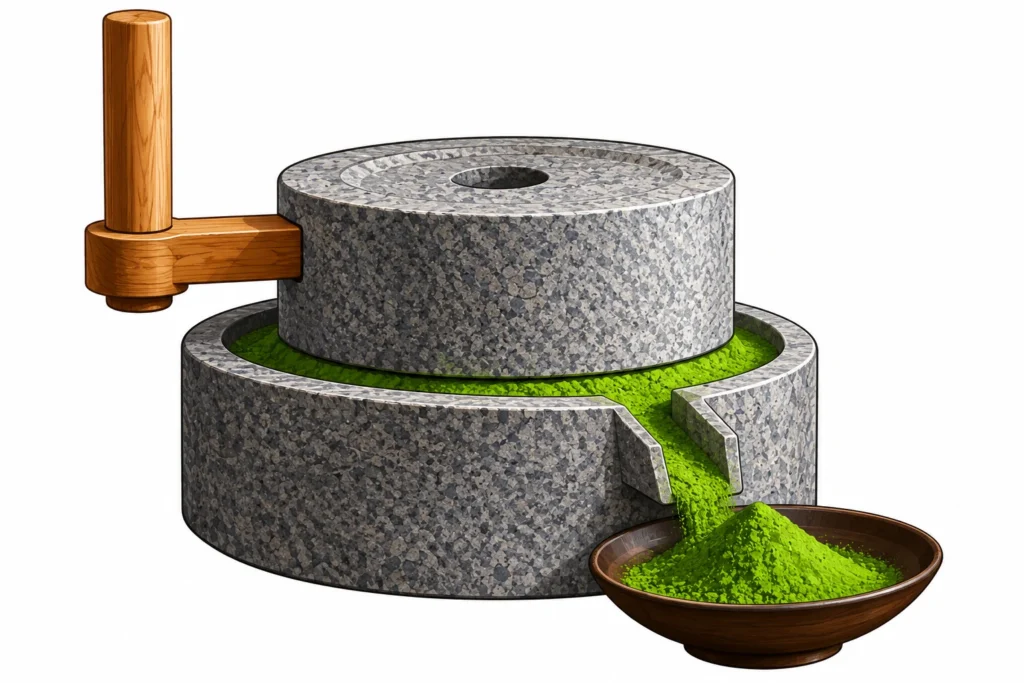
- Japan, 15th to 16th century: Japanese farmers develop shade growing to produce tencha, the special leaf used for matcha. Stone mills made just for tea appear, giving a much finer powder.
- The tea ceremony: matcha becomes the heart of chanoyu, the Japanese way of tea.
- Today: matcha is enjoyed worldwide in lattes, desserts and more.
How matcha is made
Good matcha takes careful work at every step. Here is the journey from field to powder.
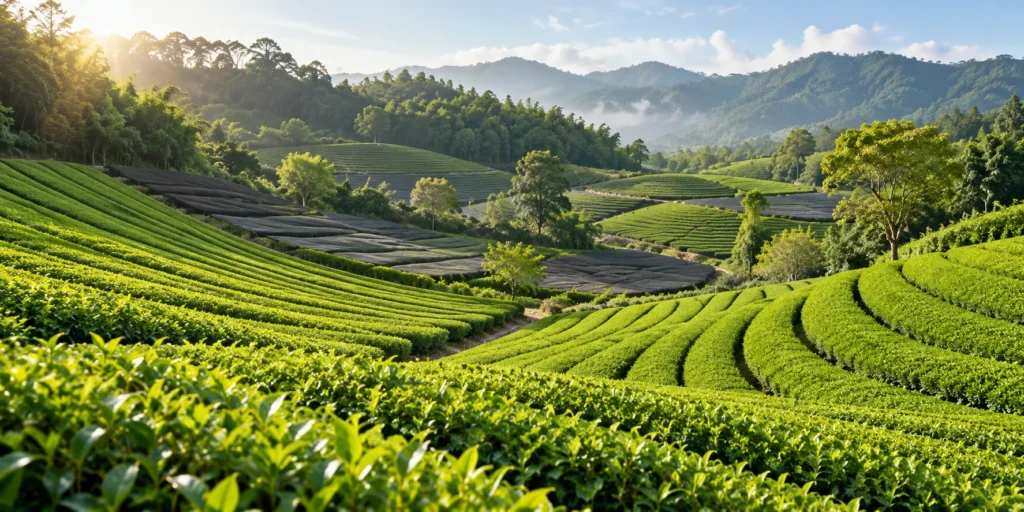
- Shading. For about 2 to 3 weeks before harvest, the tea bushes are covered to block most of the sunlight. Less sun means greener leaves, more savoury amino acids and less bitterness.
- Harvest. The young leaves are picked. The first harvest of spring usually gives the smoothest, sweetest matcha.
- Steaming. The leaves are steamed for a few seconds. This stops them oxidising and keeps the bright green colour.
- Drying. The leaves are dried with warm air, flat and without rolling (unlike most green teas).
- Sorting. Stems and veins are removed. What remains is called tencha.
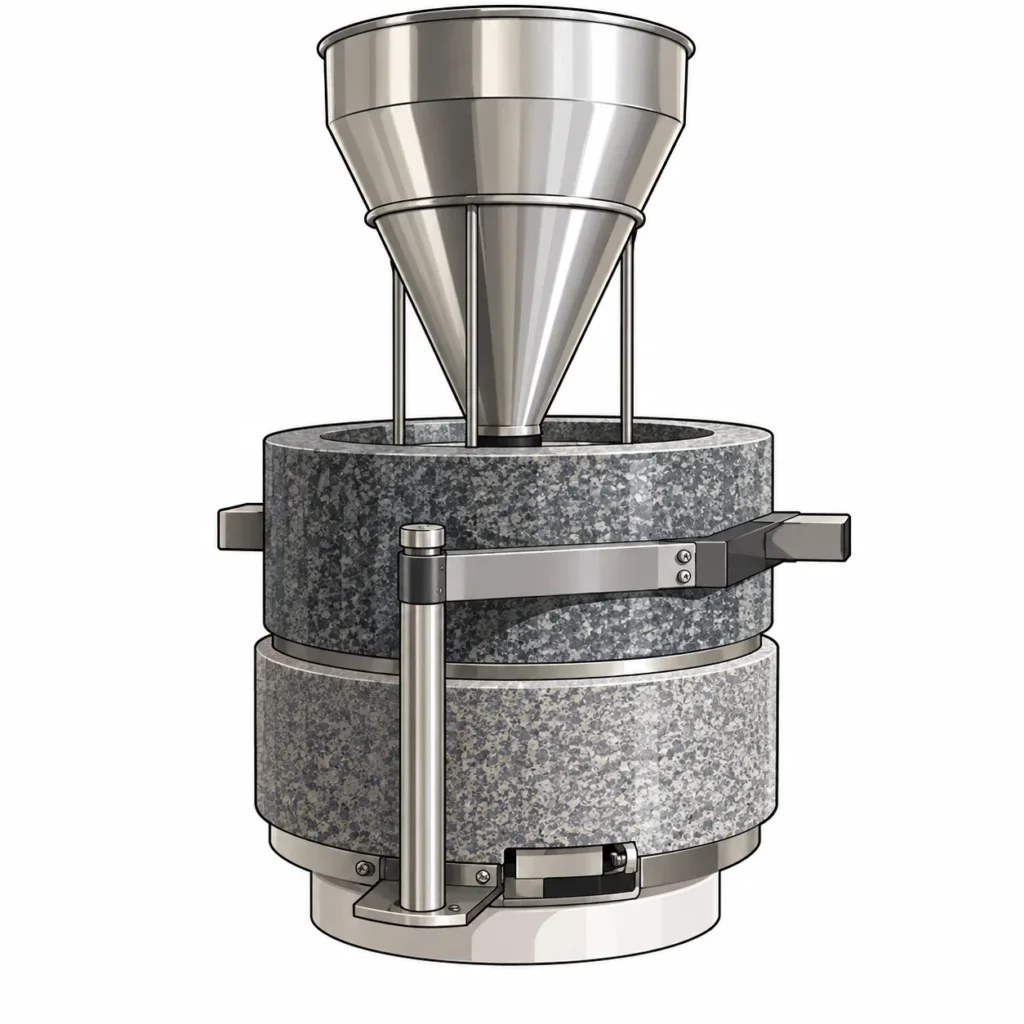
- Grinding. Tencha is ground into a fine powder, traditionally in granite stone mills. It is slow work, so fine matcha is precious.
Where matcha is grown
Almost all matcha comes from Japan, though some is now made in other countries. These are the Japanese regions you will hear about most:
| Region | Known for |
|---|---|
| Uji, Kyoto | The historic home of Japanese matcha, famous for its tea culture. |
| Nishio, Aichi | A major matcha town, reported to grow around a fifth of Japan’s tencha. |
| Kagoshima | Japan’s far south, with a warm climate and early harvests. Industry reports put it at around 40% of Japan’s tencha. |
| Shizuoka | Japan’s best-known green tea region, mostly for sencha. |
| Miyazaki and Fukuoka (Yame) | Kyushu regions with growing matcha production. |
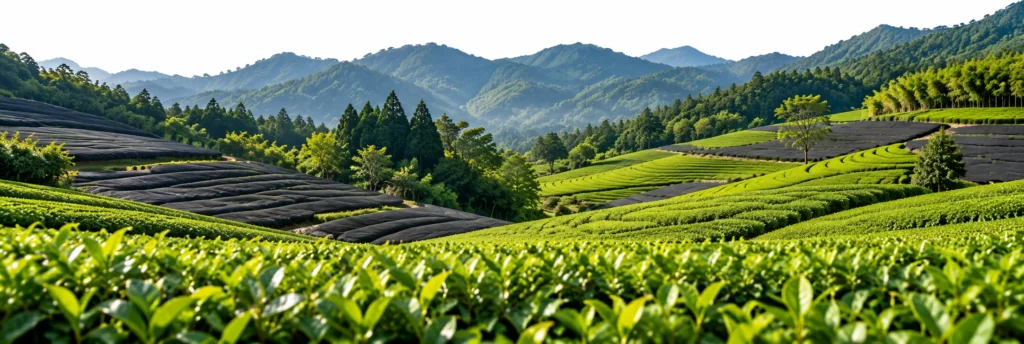
Learn more in our guide to Kagoshima matcha.
What does matcha taste like?
Good matcha tastes fresh, green and savoury. Many people describe a creamy, brothy richness called umami, balanced with a light natural sweetness and a little pleasant bitterness.
- Smoother and sweeter: early harvests and young top leaves.
- Bolder and more bitter: later harvests and older leaves. Great in lattes and baking.
- Too bitter? Your water may be too hot, or you may be using too much powder.
What is inside matcha?
Because you drink the whole leaf, you get more of what is in the tea leaf than with steeped green tea. Amounts vary a lot between matchas. Here are the ranges reported in a 2021 scientific review:
| Compound | What it does | Reported range |
|---|---|---|
| Caffeine | The natural stimulant in tea | 18.9 to 44.4 mg per gram |
| L-theanine | An amino acid behind matcha’s savoury umami taste | 6.1 to 44.7 mg per gram |
| Catechins (such as EGCG) | Plant compounds called polyphenols, linked to tea’s antioxidant activity | Varies widely |
| Chlorophyll | Gives matcha its vivid green colour | About 5.7 mg per gram |
About caffeine: a 2 g serving usually contains roughly 40 to 90 mg of caffeine. Health Canada recommends healthy adults have no more than 400 mg of caffeine a day, and no more than 300 mg a day during pregnancy or breastfeeding.
About health claims: researchers are studying matcha with interest, but much of the evidence so far comes from green tea in general or from lab studies. Enjoy matcha as a delicious drink, not as a medicine.
Matcha grades
You will often see the words ceremonial, everyday (or latte) and culinary. These are useful shorthand, not official grades, so look at the details behind them.
| Grade | Best for | Typical taste |
|---|---|---|
| Ceremonial | Drinking with water only | Smooth, sweet, gentle |
| Everyday | Daily matcha and lattes | Balanced, full umami |
| Culinary | Lattes, smoothies, baking | Bold, more bitter |
See the full comparison in Matcha Grades Explained.
Usucha vs koicha
Usucha: thin tea
The everyday way. About 2 g of matcha whisked with around 70 ml of hot water until frothy. Light and refreshing.
Koicha: thick tea
The heart of the formal tea ceremony. About twice the matcha in less than half the water, kneaded slowly into a glossy, thick tea. Made with the highest-quality matcha.
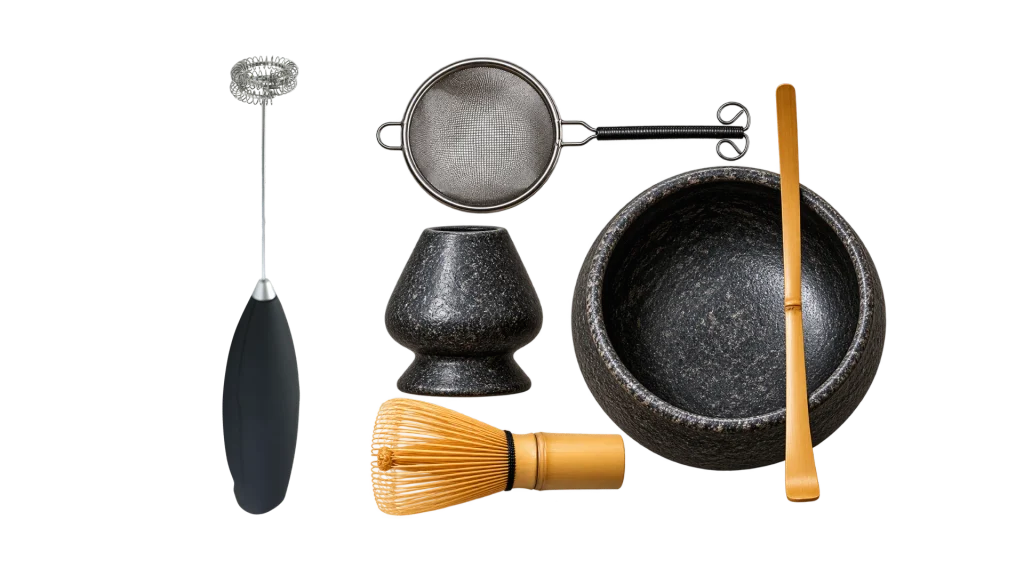
The tools you need
- Chawan (bowl): a wide bowl gives the whisk room to move.
- Chasen (bamboo whisk): makes the smooth, fine foam. A small electric frother works too.
- Chashaku (bamboo scoop): one heaped scoop is roughly 1 g.
- Small sieve: sifting stops clumps. It is the most underrated step.
How to make matcha
- Sift about 2 g (1 teaspoon) of matcha into your bowl.
- Add about 70 ml of hot water, around 70 to 80°C. Not boiling.
- Whisk quickly in a zigzag (“M” or “W”) shape for 15 to 20 seconds until frothy.
- Drink right away.
Want a latte instead? Follow our step-by-step guide or try the iced matcha latte recipe.
How to buy good matcha
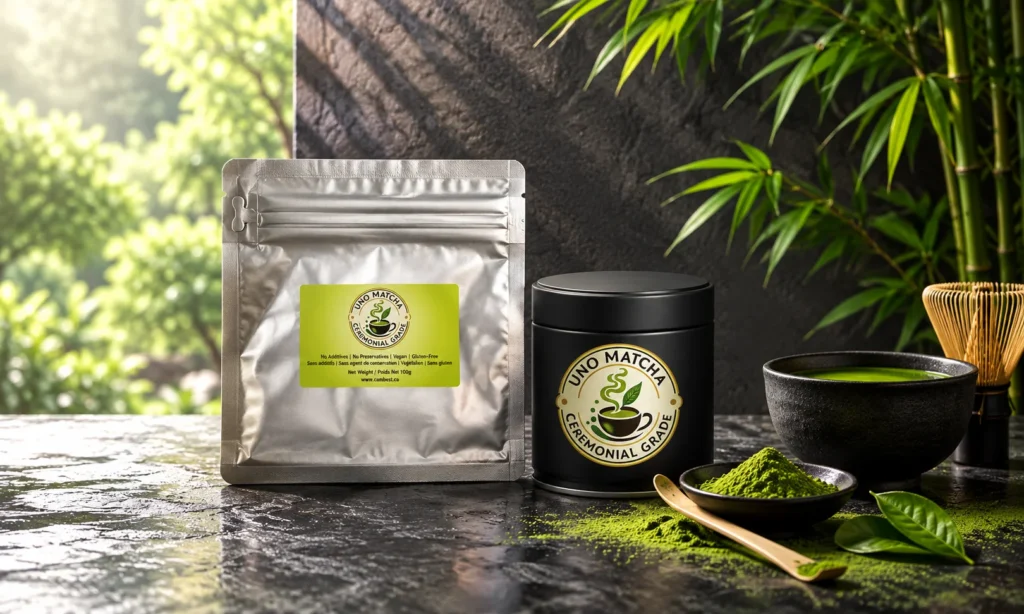
- Check the colour. Fresh, good matcha is bright, vivid green. Dull, yellow or brownish powder is often older or lower grade.
- Check the origin. Look for the country and, ideally, the region.
- Check the harvest. First-harvest matcha is usually smoother and sweeter.
- Check the packaging. Matcha hates light, air and moisture. Choose sealed, opaque packs.
- Check the date. Buy a size you will finish within a few weeks of opening.
- Match the grade to the use. Save your finest matcha for drinking straight; use culinary grade for baking.
Once opened, store it well. See how to store matcha.
Common questions
Is matcha the same as green tea powder?
Not quite. Matcha is made from shade-grown tencha leaves with stems and veins removed, then finely milled. Ordinary green tea powder is usually ground from regular, unshaded leaves and tastes more bitter.
Does matcha have more caffeine than coffee?
Usually less per serving. A 2 g serving of matcha has roughly 40 to 90 mg of caffeine, while a typical cup of brewed coffee is often around 95 mg or more.
Why is my matcha bitter?
The most common reasons are water that is too hot, too much powder, or a lower grade. Try water around 70 to 80°C and sift your matcha first.
Why is my matcha lumpy?
Matcha powder is so fine that it clumps with static and moisture. Sift it before adding water, and whisk briskly.
Can I use ceremonial matcha for baking?
You can, but its delicate flavour is lost in the oven. Culinary matcha is bolder and better value for cooking.
How long does matcha last?
Unopened, until the best-before date. Once opened, it tastes best within a few weeks. Keep it sealed, cool and dark.
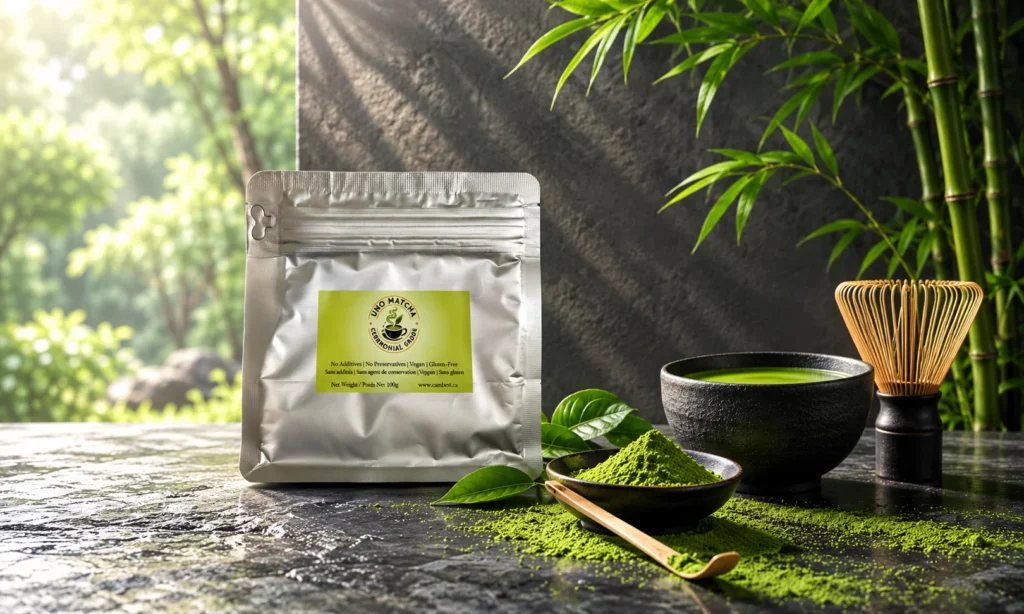
Ready to try matcha?
Explore our ceremonial, everyday and culinary matcha, chosen for flavour and clear information.
Sources
- Kochman J. et al. (2021). Health Benefits and Chemical Composition of Matcha Green Tea: A Review. Molecules.
- Health Canada. Caffeine in Foods.
- Matcha, Wikipedia (history and production overview).
- One With Tea. Matcha Growing Regions in Japan (regional production figures).